


Commercial roofing problems rarely become expensive overnight. More often, a small seam separation, blocked drain, deteriorating flashing detail, or damaged membrane goes unnoticed until water enters the building and the repair becomes significantly more complicated.
That is why commercial roof maintenance should not be treated as occasional cleaning or a response to a leak. It should be a planned process for identifying deterioration, correcting developing problems, maintaining drainage, documenting roof conditions, and extending the useful life of the roofing system.
For commercial property owners and facility managers in Nassau County, Queens, and across Long Island, this approach is particularly important because commercial roofs are exposed to rain, snow, freezing temperatures, wind, summer heat, rooftop equipment traffic, and repeated temperature changes.
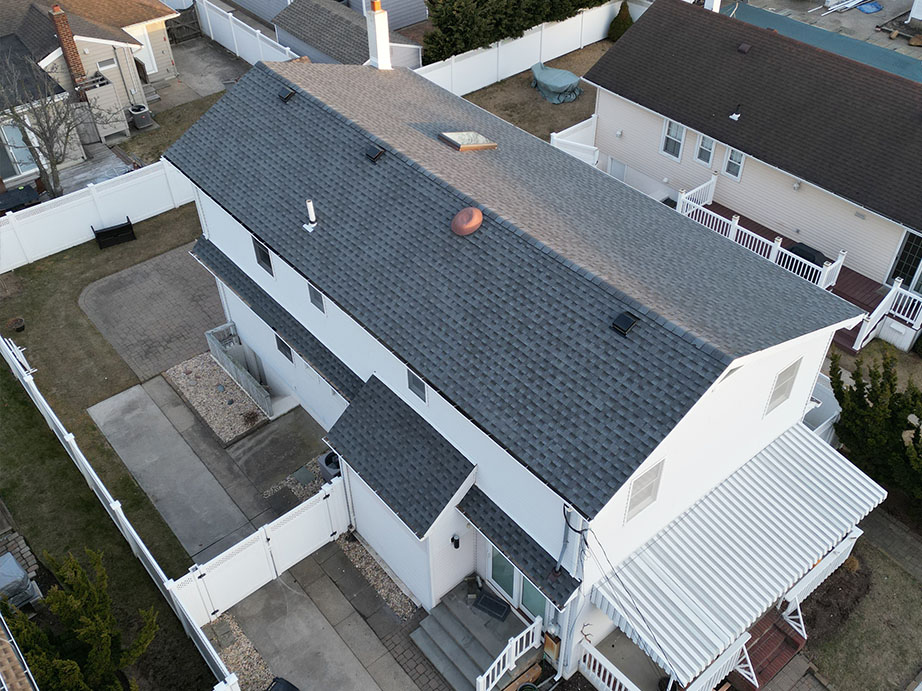
What Commercial Roof Maintenance Actually Involves
Professional maintenance is more than looking for obvious holes or cleaning debris from the roof.
A useful maintenance program evaluates the roofing system as a whole, including:
- Roof membrane or surface condition
- Seams and laps
- Flashing and perimeter details
- Roof penetrations
- HVAC and other rooftop equipment areas
- Drains, scuppers, gutters, and downspouts
- Ponding-water areas
- Parapet walls and coping
- Roof edges
- Sealants and transition points
- Visible insulation or decking concerns
- Previous repair areas
- Signs of moisture intrusion
- Damage caused by contractors or rooftop traffic
The objective is not simply to document what is wrong. It is to determine what is likely to fail next and what should be addressed before that failure affects the building.
That distinction is important.
A roof can appear reasonably good from a distance while still having developing problems around penetrations, seams, drains, or flashing.
Why Commercial Roofs Need a Different Maintenance Strategy
A commercial roof is often a much more complicated working environment than a residential roof.
Rooftop HVAC units, exhaust systems, vents, electrical equipment, access pathways, drains, skylights, parapets, and other penetrations create numerous areas where the roofing system can be stressed or interrupted.
There is also a major difference between the cost of a roofing problem and the cost of the consequences.
A leak above an office may damage ceiling materials.
A leak above a warehouse can affect inventory.
A leak above a retail space can disrupt customers and employees.
A leak in a mixed-use building can create tenant complaints, property damage, and potentially larger building-management problems.
This is why commercial roof maintenance should be evaluated according to the building’s use and risk profile rather than using a generic once-a-year checklist.
Commercial Roof Inspection vs. Commercial Roof Maintenance
These terms are related, but they are not interchangeable.
A commercial roof inspection is an evaluation of the roof’s current condition.
A commercial roof maintenance program is an ongoing strategy for managing that condition.
An inspection may identify:
- Open or deteriorating seams
- Damaged flashing
- Membrane punctures
- Blocked drainage
- Ponding water
- Deteriorated sealants
- Rooftop equipment damage
- Areas requiring closer investigation
- Evidence of moisture intrusion
Maintenance then turns those findings into action.
For example, an inspection may identify a deteriorating flashing detail around a rooftop penetration. Maintenance means repairing that detail before it becomes a source of water intrusion.
That relationship makes inspection the diagnostic component and maintenance the ongoing management component.
Abraham Roofing’s commercial roofing service already includes roof inspections and condition reports as well as preventative maintenance programs, making a structured maintenance approach particularly useful for commercial property owners.
The Areas Experienced Roofers Check First
Not every part of a commercial roof carries the same risk.
Experienced roofing professionals pay particular attention to areas where roofing materials change, terminate, are penetrated, or are exposed to repeated movement.
1. Roof Penetrations
Every pipe, vent, HVAC support, curb, skylight, or other penetration creates a potential transition point.
The membrane may remain intact while the flashing, boot, sealant, or attachment detail around the penetration deteriorates.
These areas deserve close inspection because they are common sources of recurring leaks.
2. Seams and Membrane Transitions
For membrane roofing systems, seams are critical.
Depending on the roofing system, deterioration can involve adhesive failure, seam separation, punctures, shrinkage, mechanical damage, or deterioration around previous repairs.
A maintenance inspection should identify developing seam problems before they become active leaks.
3. Drains and Scuppers
Drainage is one of the most important components of a commercial low-slope roof.
A blocked drain can allow water to accumulate on the roof. If ponding becomes persistent, simply repairing the membrane without addressing the drainage problem may leave the underlying cause untouched.
This is also why drainage should be considered part of the roofing system rather than an unrelated maintenance item.
4. Flashing and Perimeter Details
Roofing systems often fail at transitions rather than in the middle of an otherwise intact roof surface.
Flashing around walls, curbs, penetrations, edges, and other transitions should therefore be evaluated carefully.
Loose metal, deteriorated sealants, gaps, corrosion, or movement can allow water to bypass the primary roofing surface.
5. Rooftop Equipment Areas
Commercial HVAC contractors and other trades may need regular access to rooftop equipment.
Foot traffic, dropped tools, equipment work, and improper pathways can damage roofing materials.
A maintenance program should therefore identify areas of repeated traffic and confirm that rooftop work has not compromised the roofing system.
What a Commercial Roof Maintenance Program Should Include
A useful maintenance program should produce more than a verbal statement that the roof “looks good.”
Property owners should ideally receive documentation of:
Roof condition:
What was inspected and what condition was observed.
Deficiencies:
Which areas require attention and how serious each issue appears.
Recommended repairs:
What should be repaired immediately versus monitored.
Drainage condition:
Whether drains, scuppers, gutters, and related drainage components are functioning properly.
Previous repair areas:
Whether older repairs are still performing as expected.
Photographic documentation:
Images of significant defects and repaired areas.
Priority level:
Which issues require immediate attention and which can be incorporated into planned maintenance.
This information becomes increasingly valuable when a property changes ownership, when budgets are being prepared, or when a building manager needs to demonstrate that the roof has been properly maintained.
How Often Should a Commercial Roof Be Maintained?
There is no single maintenance interval that works for every commercial building.
The appropriate schedule depends on factors such as:
- Roofing system and age
- Building use
- Roof size
- Number of penetrations
- Rooftop equipment
- Drainage configuration
- Tree exposure
- Previous leak history
- Severe weather exposure
- Foot traffic
- Previous repairs
The important point is consistency.
Waiting until employees discover a ceiling stain is not a maintenance program.
A roof with heavy equipment traffic and complicated drainage may need closer attention than a simpler system with fewer penetrations and limited rooftop activity.
When a Roof Inspection Should Happen Immediately
Routine inspections are important, but certain situations justify an additional evaluation.
After Significant Storms
High winds, heavy rain, hail, and debris can damage membranes, flashing, roof edges, penetrations, and rooftop equipment.
Some damage may not be obvious from the ground.
After a Major Rooftop Project
HVAC replacement, electrical work, solar installation, and other rooftop projects can create new penetrations or foot traffic.
The roofing system should be checked after major work is completed.
When a Leak Reappears
A recurring leak should not automatically be treated as the same repair problem.
Water can travel beneath roofing materials before entering the building, meaning the visible interior location may not correspond with the actual point of entry.
Repeated patching without identifying the underlying failure can turn maintenance into an endless repair cycle.
When Ponding Water Appears
Persistent standing water deserves investigation.
The question is not simply whether the membrane is waterproof today. The more important question is why the water is remaining there and whether the condition is accelerating deterioration.
Preventive Maintenance vs. Emergency Roof Repairs
The financial advantage of maintenance is not that every roof problem can be prevented.
It is that developing problems can often be identified while the repair scope is still controlled.
Consider two scenarios.
In the first, a contractor identifies a deteriorating flashing detail during a scheduled inspection and repairs it.
In the second, the same detail fails during a storm. Water enters the building, damages interior finishes, affects insulation, interrupts operations, and requires emergency service.
The roofing defect may have been similar.
The consequences are not.
Abraham Roofing specifically promotes preventative maintenance programs for commercial properties, with the goal of catching issues such as ponding water, failing seams, and clogged drains before they develop into larger repairs.
Maintenance Is Not a Substitute for Replacement
Preventive maintenance can extend the useful life of a commercial roof, but it cannot reverse every form of deterioration.
A roof may be approaching replacement when it has:
- Widespread membrane deterioration
- Extensive recurring leaks
- Significant moisture within the roofing assembly
- Repeated failures in previously repaired areas
- Severe drainage problems
- Extensive surface damage
- Structural concerns
- Deterioration across large portions of the system
The right decision is not always “repair” or always “replace.”
A professional assessment should determine whether the roofing system still has enough serviceable life to justify continued maintenance.
For businesses considering whether continued repairs make financial sense, this assessment should be based on the extent, frequency, and location of failures, not simply the age of the roof.
Build a Roof History, Not Just a Repair History
One of the most useful practices for commercial property owners is maintaining a roof history.
Keep records of:
- Installation date
- Roofing system and manufacturer
- Previous repairs
- Inspection reports
- Leak locations
- Drainage work
- Storm-related damage
- Rooftop equipment projects
- Warranty information
- Photographs
- Recommended future work
This creates a record of how the roof is aging.
It also makes future decisions easier.
Instead of asking, “Do we need to replace the roof?” a property owner can ask more useful questions:
What has failed?
How frequently is it failing?
Where is it failing?
How much has already been spent on repairs?
How much useful life remains?
That is a much better basis for a capital-planning decision.
Don’t Separate Roof Maintenance From Drainage Maintenance
Water management deserves special attention on commercial properties.
A roof can have an otherwise serviceable membrane and still experience problems when drains, scuppers, gutters, or downspouts are obstructed or unable to move water efficiently.
For that reason, drainage should be reviewed as part of the overall roof-maintenance strategy.
This is particularly relevant for Long Island properties where seasonal debris and winter conditions can affect drainage components.
Abraham Roofing’s existing gutter cleaning and maintenance service includes debris removal, gutter repair, downspout maintenance, seasonal service, and inspection of related roof-edge components.
The natural relationship is simple: the roof sheds water, and the drainage system has to move it away from the building.
Commercial Roof Maintenance for Long Island Properties
Commercial properties across Nassau County, Queens, and Long Island face a combination of weather and building-specific stresses throughout the year.
Rain, snow, freezing temperatures, summer heat, wind, and seasonal storms can expose weaknesses that remain unnoticed during normal building operations.
The answer is not to wait for the next leak.
A proactive maintenance strategy gives property owners an opportunity to identify deterioration, prioritize repairs, maintain drainage, document roof conditions, and make replacement decisions based on evidence rather than emergency circumstances.
For properties with flat or low-slope systems, this becomes even more important because drainage, seams, penetrations, and membrane condition all contribute to long-term performance.
Property owners can also review Abraham Roofing’s commercial roofing services to see how maintenance fits alongside commercial repairs, inspections, drainage, flashing, and replacement.
When to Bring in a Commercial Roofing Contractor
A maintenance program should be handled by a contractor who understands the roofing system rather than simply someone who performs surface cleaning.
Professional assistance is particularly important when you notice:
- Repeated leaks
- Persistent ponding water
- Damaged membrane
- Open seams
- Deteriorated flashing
- Blocked or damaged drains
- Roof-edge deterioration
- Interior water staining
- Damage following a storm
- Problems around rooftop equipment
At that point, the goal should be diagnosis rather than another temporary patch.
Frequently Asked Questions About Commercial Roof Maintenance
How often should a commercial roof be inspected?
The appropriate frequency depends on the roofing system, age, building use, weather exposure, rooftop equipment, drainage, and previous repair history. Properties with complicated roofs or recurring problems may require more frequent monitoring than newer, simpler systems.
What is included in commercial roof maintenance?
A professional maintenance program can include inspection of the membrane, seams, flashing, penetrations, roof edges, drains, scuppers, rooftop equipment areas, previous repairs, and other vulnerable details. It should also identify repairs that need immediate attention versus conditions that can be monitored.
Can commercial roof maintenance prevent leaks?
Maintenance cannot guarantee that a roof will never leak, but it can identify developing defects before they become active failures. Catching deteriorating flashing, open seams, blocked drainage, and membrane damage early can reduce the likelihood of more disruptive problems.
Should a commercial roof be inspected after a storm?
Yes, particularly after significant wind, hail, heavy rain, or debris impact. Some roofing damage may not be obvious from ground level, so a professional assessment can help identify problems before they develop into leaks.
Does ponding water mean a commercial roof needs replacement?
Not necessarily. Ponding water is a condition that should be investigated rather than automatically treated as a replacement issue. The cause may involve blocked drainage, inadequate slope, localized depressions, or another roofing-system problem. The appropriate solution depends on the condition and extent of the issue.
When should a commercial roof be replaced instead of repaired?
Replacement becomes more appropriate when deterioration is widespread, repairs are recurring, moisture has affected significant portions of the roofing assembly, or the remaining serviceable life no longer justifies continued repair costs. A professional condition assessment should be used to make that decision.
Is commercial roof maintenance different from residential roof maintenance?
Yes. Commercial roofs often involve low-slope systems, membrane materials, rooftop HVAC equipment, multiple penetrations, larger drainage systems, and more complex access requirements. Maintenance therefore needs to account for the entire roofing assembly and the building’s operational requirements.
Can rooftop HVAC work damage a commercial roof?
It can. HVAC installation and maintenance involve foot traffic, equipment movement, tools, fasteners, and work around roof penetrations. Roofing should be inspected after significant rooftop projects to identify accidental damage or compromised flashing and seals.
What should a property owner receive after a commercial roof inspection?
A useful inspection report should identify observed deficiencies, their locations, photographic evidence where appropriate, recommended repairs, priority levels, and any conditions that should be monitored. Good documentation allows property owners to plan maintenance rather than relying on emergency decisions.
Does Abraham Roofing provide commercial roof maintenance?
Yes. Abraham Roofing lists preventative maintenance programs, commercial roof inspections and condition reports, leak detection and repair, flashing and penetration sealing, drainage systems, and emergency roof repairs among its commercial roofing services.
Final Thoughts
Commercial roof maintenance is ultimately a risk-management strategy.
The goal is not to keep a roof looking new. The goal is to understand how the roofing system is performing, identify developing failures, correct vulnerable details, maintain proper drainage, and make informed decisions about repairs and eventual replacement.
For commercial property owners, this approach can reduce unexpected disruptions and provide a clearer picture of where the roof stands financially and technically.
Abraham Roofing provides commercial roof inspections, maintenance, repairs, drainage solutions, waterproofing, and replacement services for businesses and property owners throughout Nassau County, Queens, and Long Island. The company’s commercial roofing service is built around inspections, preventive maintenance, repairs, and roofing-system solutions designed around the building’s requirements.
A commercial roof does not need to be replaced simply because it is aging. But it should never be ignored simply because it is not leaking today.
