


Late September gave Long Island a preview. A slow-moving nor’easter dropped 5.33 inches of rain at the National Weather Service office in Upton, pushed gusts past 70 mph at Stony Brook, and brought trees down on homes across the Island, according to Cotality’s storm report. Analysts warned it could be the first of several fall nor’easters this year.
Storms rarely destroy healthy roofs. They find the weak spots that were already there. If your roof shows any of the five warning signs below, now is the time to book a roof repair service in New York, while crews can still work in dry, above-freezing weather.
Here is what to look for, and what to do about it.
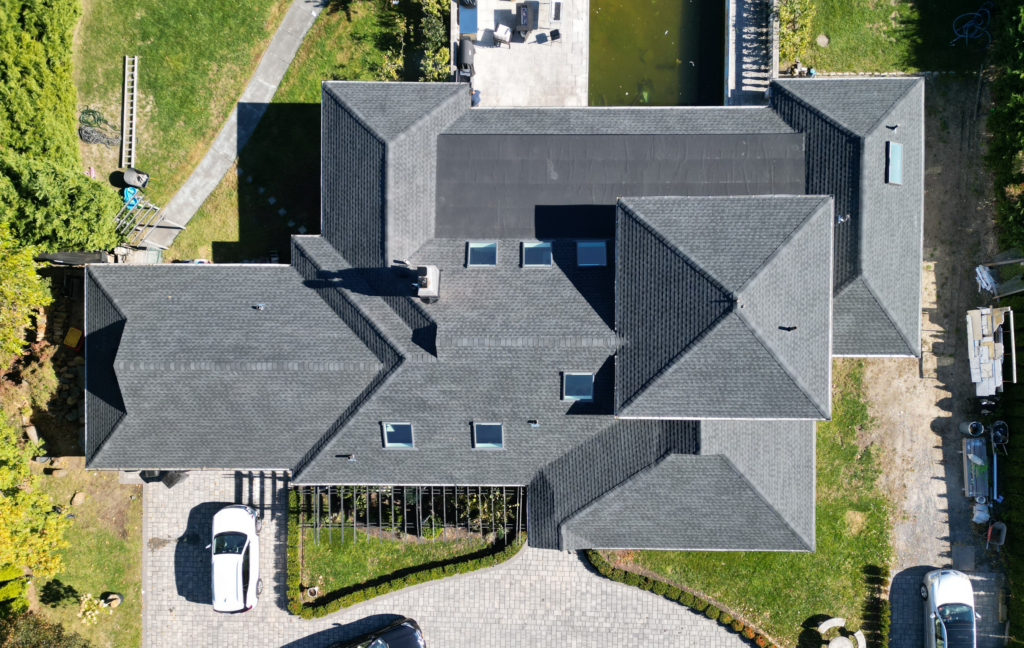
Sign 1: Missing, Lifted or Curling Shingles
Shingles are your roof’s first line of defense, and wind is their main enemy. A shingle that lifts in one storm loses its seal. The next gust can tear it off completely.
Walk the property and look for:
- Gaps or bare spots where shingles used to be
- Edges that curl up, or shingles that cup in the middle
- Cracked tabs, or shingles that sit out of line with their neighbors
- Shingle pieces in the yard after a windy day
One loose shingle is a quick fix. Leave it, and a nor’easter can peel back the whole row and expose the underlayment to driving rain. Our guide to how winter winds loosen shingles shows how the failure spreads, step by step.
Sign 2: Water Stains, Damp Insulation or a “Small” Leak
A brown ring on the ceiling means water has already made it past the shingles, the underlayment and the deck. That stain is not the start of the problem. It is the end of a long trip.
Check your attic on a dry afternoon with a flashlight. Look for dark patches on the underside of the roof deck, damp or matted insulation, rusty nail tips, and daylight where there should not be any. Water often runs along rafters before it drips, so the stain on your ceiling may sit several feet from the real point of entry.
A slow drip in light rain becomes a steady flow in five inches of it. Read the true cost of ignoring minor roof leaks, then see our roof leak timeline for how quickly damage moves from drywall into framing and mold.
Sign 3: Failing Flashing Around Chimneys, Skylights and Vents
Many of the leaks we trace on Long Island homes do not start in the middle of the roof. They start where the roof meets something else: a chimney, a wall, a skylight or a plumbing vent.
Flashing is the metal and membrane that seals those joints. Coastal salt air corrodes it, freeze-thaw cycles crack the sealant, and old caulk shrinks away from brick. Warning signs include:
- Rust, gaps or lifted metal at the base of the chimney
- Cracked, dried-out or missing caulk
- Water marks on the ceiling or trim around a skylight
- A cracked rubber boot around a plumbing vent pipe
Nor’easter rain does not fall straight down. It blows sideways, right into these gaps. If you have skylights, check the interior trim for stains now. Our post on the impact of weather on chimney sealing explains why chimney joints are usually the first to go.
Sign 4: Overflowing Gutters and Granules in the Downspouts
Gutters are part of the roof system, not an accessory. When they are packed with October leaves, water backs up under the roof edge, soaks the fascia and rots the deck from the outside in. Once temperatures drop, that same backup freezes and feeds ice dams.
Two things to check:
- Overflow: water spilling over the front of the gutter during rain, or streaks on the siding below
- Granules: the gritty, sand-like coating from asphalt shingles collecting in the gutters or at the bottom of the downspouts
Heavy granule loss means the shingles are wearing thin and losing their protection against sun and water. It is often the earliest sign of an aging roof, long before anything leaks. See why gutter cleaning saves you thousands in winter roof repairs, and how gutters and roofing work together to keep water off the deck.
Sign 5: An Older Roof That Has Already Taken a Few Storms
Age alone does not mean failure, but it changes the math. Roofs in New York’s coastal climate wear faster than the label suggests, and every storm takes a little more out of them. Get an inspection now if your roof is past 15 years old, has had more than one leak repaired, or rode out the September nor’easter without anyone looking at it.
There is an insurance angle too. Many insurers look harder at roof age and condition at renewal and at claim time. Dated photos and an inspection report from before a storm make it much easier to show that new damage came from the storm, not from neglect.
Find out how long a roof lasts in New York’s climate. If you have already called someone about the same leak twice, the three-call rule explains when patching stops making sense and roof replacement becomes the smarter spend.
Book a Roof Repair Service in New York Before Winter Sets In
Fall is the window. Shingles seal properly in mild temperatures, sealants cure, and crews are not working around snow and ice. Once the cold arrives, winter roof repairs are risky and often limited to temporary fixes until spring.
Here is the order we recommend:
- Book an inspection now, not after the next storm. A proper inspection covers the roof surface, flashing, gutters and attic, with photos of everything found.
- Fix the small things first. Resealed flashing and a few new shingles cost a fraction of what interior water damage does.
- Clear the gutters once the leaves are down, then work through our Long Island winter roof checklist.
- Decide who you will call before you need them. After a big storm, out-of-town crews go door to door with high-pressure offers. Learn how storm chasers operate, and keep our questions to ask a roofing contractor handy.
If a storm has already done damage, follow our steps on what to do after a severe storm.
When you compare roof repair services, New York homeowners should insist on a local license, current proof of insurance and a written scope of work. Abraham Roofing holds Nassau County HIC License H18F9880000 and is a GAF Master Elite® contractor, a designation GAF reserves for a small share of roofers. Our roof repair team finds the cause, not just the symptom. For a deeper look at repair options and what an estimate should include, read our full guide to roof repair services in New York.
Frequently Asked Questions
How do I know if my roof needs repair before a storm?
Look for missing or curling shingles, attic moisture or ceiling stains, damaged flashing, overflowing gutters and granules in the downspouts. If you see any of these, or your roof is past 15 years old, book an inspection before the next nor’easter.
What does a roof repair service in New York typically include?
A proper service starts with an inspection of the roof surface, flashing, penetrations, gutters and attic to find where water is actually getting in. The repair then fixes that point of failure, whether it is shingles, flashing, a vent boot or a damaged section of deck.
Should I get my roof inspected after a nor’easter?
Yes. Wind can break shingle seals and shift flashing without leaving damage you can see from the ground. An inspection with photos also gives you a record if you need to file an insurance claim.
Can roofs be repaired in winter in New York?
Emergency repairs can be made year-round, but cold weather limits how well shingles and sealants bond. Permanent repairs are best done in fall, before temperatures drop.
Does Abraham Roofing offer free estimates?
Yes. An estimator inspects your roof in person and gives you a clear diagnosis, with no obligation.
